
To engage with oil on canvas is to enter a high-stakes negotiation with entropy, the natural force of decay that serves as both a physical reality and a powerful metaphor for existence. In the quiet intensity of the studio, the act of painting often echoes the persistent, haunting legacy of Francis Bacon. While Bacon remains a titan of 20th century figurative distortion, his exploration of the "spaces between" provides a vital framework for contemporary inquiries into how order dissolves to reveal a new, vibrating reality.
This discourse explores the intersection of thermodynamic laws and the painterly act, moving through the clinical isolation of the frame, the chronological liberation of defacement, and the eventual transition into a state of absolute pictorial purity.
The Architecture of the Closed System
In the realm of physics, entropy, the measure of disorder or randomness, is most observable and measurable within a closed system. This is a space where energy cannot escape, and the internal components must eventually settle into a state of equilibrium or total "noise." To understand the painting as a closed system, one must first view the canvas not as a window, but as a laboratory.
Bacon’s Clinical Containers
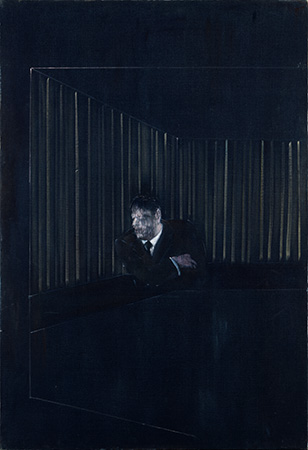
Francis Bacon was perhaps the first modern master to treat the canvas as a literal pressure cooker for entropy. He famously utilized "space frames," which were thin, etched lines forming transparent cubes or cages, to isolate his subjects. By stripping away the "noise" of a traditional room or a narrative landscape, he created a vacuum. Inside these lines, the human form has nowhere to escape its own dissolution. The figure is not merely sitting; it is vibrating at a frequency that threatens its structural integrity.
These cages served a dual purpose. First, they focused the viewer’s eye with surgical precision, removing the distraction of storytelling. Second, they functioned as the mechanical boundaries of a thermodynamic event. When Bacon painted a screaming head or a contorted torso within these frames, he was documenting the breakdown of matter under the pressure of isolation. The frame is the container, the figure is the energy source, and the distortion is the entropy.
The Canvas as a Microcosm
Modern research into entropy suggests that the edges of the linen themselves serve as the boundary of the closed system. Every mark made is an addition of energy. In this environment, the artist must navigate what are often called the "three lies of painting," which are the deceptions of representation, depth, and finality.
When we start a painting, we begin with high Information, such as a sketch, a plan, or a likeness. As the process continues, the artist introduces heat through the friction of the brush, the chemical reaction of solvents, and the physical act of reconsidering the image. By managing the heat of the system, the work moves toward a state where the initial information transitions into a state of Equilibrium. In this state, the figure and the background become one unified, vibrating field. The disorder of the entropy becomes the order of the atmosphere.
The closed system of the canvas eventually reaches a point where no more work can be performed without destroying the system itself. This is the moment of completion, not because the story is told, but because the energy has reached its most stable, resonant frequency.
Defacing as a Correction of Time
The act of defacing a work is often misinterpreted as an act of anger, iconoclasm, or frustration. However, when viewed through the lens of entropy and the preservation of energy, it reveals itself as a sophisticated tool for chronological liberation. It is an act of un-painting that paradoxically allows the painting to live.
Bacon’s "Accident"
Bacon famously remarked that he wanted to "scramble the edge" of the image. He relied on what he called the "calculated accident," which involved throwing paint, using a dust-covered rag, or scrubbing a perfectly rendered face with a sponge. This was not a desire to destroy the work, but a desire to bypass the brain’s tendency to tell stories.
By defacing the illustrative likeness, he injected a moment of pure, unpredictable time into a static portrait. He was forcing the image to "un-become" in order to find a deeper, more visceral truth. This accident is the introduction of a high-entropy event into a low-entropy system. It breaks the grip of the artist's conscious will, allowing the paint to settle into a configuration that the human mind could never have deliberately planned.
Systematic Erasure and Reconfiguration
In contemporary practice, as seen in the Defacing Art Project, defacing serves as a "symbolic severing" from the past. By wiping away, sanding, or thinning a layer that was previously "finished," the artist restarts the clock of the painting. This creates a state of flux.
- The Past as Material: In an entropic practice, the past is not discarded; it is reconfigured. The ghost of the previous image remains in the weave of the canvas. This is not erasing in the sense of making something disappear, but rather thinning the veil of time. The previous marks provide a textured history, a foundation of ordered noise that informs the new state of the work.
- Healing the Limbo: Often, a painting can fall into an emotional limbo where it is too precious to change but not alive enough to be finished. This is a state of stagnant entropy. Defacement is the cure for this stagnation. It is an evolutionary act that allows the work to breathe again, ensuring that the past does not dictate the future of the piece.
By defacing, we admit that the image is a living thing, capable of growth and decay. We treat the canvas as a site of archaeological excavation where the find is not an object, but a vibration.
The Unruly Magic of Pigment: Beyond the Brush
Both Bacon and modern researchers into entropy share a fundamental distrust of the brush. The brush is a tool of the conscious mind; it is designed to describe, outline, and control. It is the tool of Information. To reach a state of entropy, the state of the Signal, the artist must allow the medium its own agency.
Against the "Illustrative"
Bacon wanted the paint to be the thing, not just a description of it. He wanted the color of meat to hit the viewer’s nervous system before their brain could label it "a person." To achieve this, he had to break the connection between the hand and the eye. He used non-traditional tools such as combs, sponges, and even his own hands to apply the oil. These tools lack the precision of the brush, which is exactly why they are effective. They introduce a level of physical entropy that prevents the image from becoming too polite.
Recouvrement and the Ether
Research into the "Unruly Magic of Color" explores how pigments like Lapis Lazuli, Cadmium, or Cinnabar behave when the artist’s hand is removed from the equation. Through techniques of recouvrement, which is layering to obscure, and extreme thinning, the paint is allowed to flow according to the laws of gravity and evaporation. In the Natural Entropy series, this process is pushed to its chemical limit.
- The Frequency of Color: Every pigment has a vibration. Natural minerals have a different entropic signature than synthetic dyes. When the noise of representation is stripped away through defacement, what remains is the raw frequency of the pigment itself. We are no longer looking at a blue dress; we are looking at the vibration of Lapis Lazuli interacting with light.
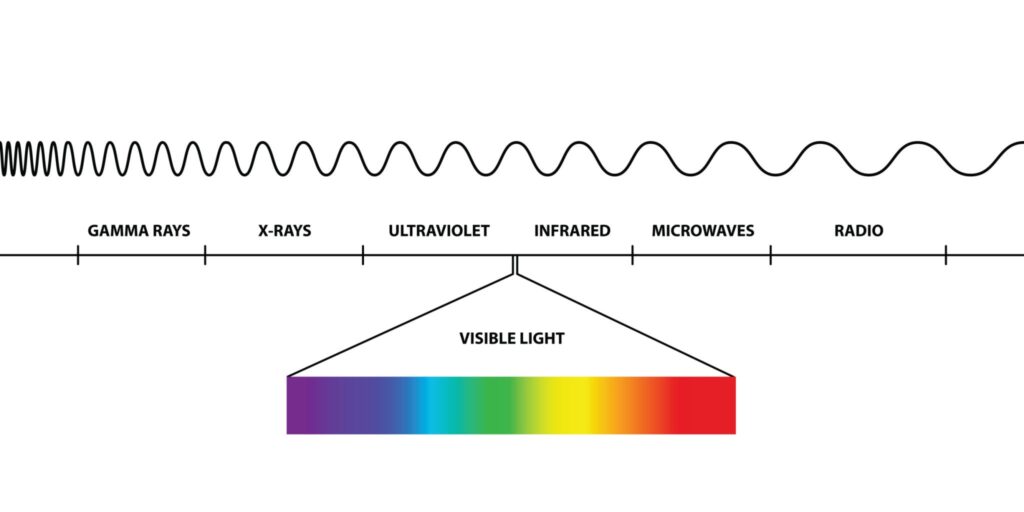
- Touching the Ether: The goal of this entropic process is to reach the Ether. If Bacon’s entropy resulted in the meat, the raw, bleeding reality of the physical body, the contemporary quest is for purity and absoluteness in pictorial form. The Ether is the space where light and color vibrate in a state of absolute clarity. It is the point of maximum entropy where the painting is no longer an object, but a frequency.
By thinning the oil to the point of transparency, we allow the light to penetrate the layers and bounce off the white of the primer. This creates a luminous, breathing surface that seems to radiate from within. It is the visual equivalent of a hum, a steady, constant state of energy.
The Final Lie: The Illusion of the Finished Work
If we accept that entropy is the only true constant, meaning everything is in a state of falling apart or coming together, then a finished or perfect painting is the ultimate deception. This challenges the very notion of the static artwork. The painting is not a destination; it is a duration.
By embracing entropy, the artist admits that the work is a process of unbecoming. It is a snapshot of energy that only stops when the observer intervenes. Bacon’s triptychs often feel as though they were caught mid-scream or mid-melt; they are not monuments, but events. They represent a reality that is too fluid to be captured, only witnessed.
Similarly, by scrambling representational codes and thinning the medium to its breaking point, modern painting celebrates this disorder. We do not lose reality through the act of defacing; we liberate it from the prison of likeness. We move from the Lie of Representation to the Truth of Vibration. The painting becomes a mirror of the universe's own entropic journey, a beautiful, terrifying slide toward a state of perfect, silent equilibrium.
The Three Lies are not failures of the artist; they are the tools of the craft. We lie about space to talk about depth; we lie about likeness to talk about identity; we lie about the end to talk about eternity. By acknowledging these lies, we find the Signal that exists between the brushstrokes.
Reaching the Signal
The dialogue between the legacy of Francis Bacon and modern entropic research is a testament to the power of the un-painting. It is a rejection of the static and a celebration of the kinetic. Whether it is through the clinical isolation of the cage or the systematic erasure of the surface, the goal remains the same: to find the sublime beauty within the breakdown.
In the end, the Natural Entropy of the canvas is not an ending, but a journey. It is a transition from the heavy, terrestrial world of Things to the light, vibrating world of the Ether. By letting go of the edge, by allowing the paint to fall, the image to blur, and the past to be defaced, we finally reach the signal. We discover that in the heart of disorder lies the most profound order of all: the pure, unadulterated vibration of existence.
To follow the daily evolution of these entropic experiments and studio research, visit @pablogt on Instagram.